




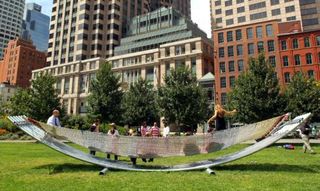
 My father Barry Galvin was way ahead of his time. In 1978, he broke the Guinness World Record for hammock swinging to garner publicity for his two hammock stores in the San Francisco Bay Area. In 1984, my friend Mark Ungar and I eclipsed my father's record of eight days by a couple hours. The 1984 record got additional exposure because Mark and I said that we wanted to draw attention to the sport of hammock swinging so it would be made an official Olympic sport (a particularly good angle since the '84 Summer Olympics was about to take place in Los Angeles).Both record-breaking efforts garnered excellent exposure for the family stores including TV, newspaper, and radio coverage and hammock sales spiked. Unfortunately, I couldn't find a photo of our record breaking endeavor so I'm using a photo of the world's largest portable hammock.
This week, The Wall Street Journal ran an interesting piece entitled "Fastest-Growing PR Stunt: Get Into Guinness Records" noting that Guinness has seen the number of record-breaking requests increase 250% over the past three years, with the majority coming from corporations. Apparently, as event marketing has become more widespread as a promotional tool—ranging from from rock concerts to walk-a-thons—marketers have been casting around for new ways to help their events get noticed, and they've discovered that a Guinness record attempt is a great way to build buzz on the cheap (it only costs about $4,700 to have Guinness register a record).
Based on my experience and what I've seen from other companies that have turned Guinness records into valuable publicity, the key is to ensure that the record being broken is closely related to the product or service that a company offers so the buzz around a record truly promotes what a business does. I was surprised to read that some companies are breaking records in areas that are completely unrelated to their core activities. For instance, recently cosmetics giant Estée Lauder set a record for having the "most landmarks illuminated for a cause in 24 hours." And, what does that have to do with cosmetic products? I'll keep on the lookout for articles about the tangible benefits that Estée Lauder feels it got from its record.


Comments